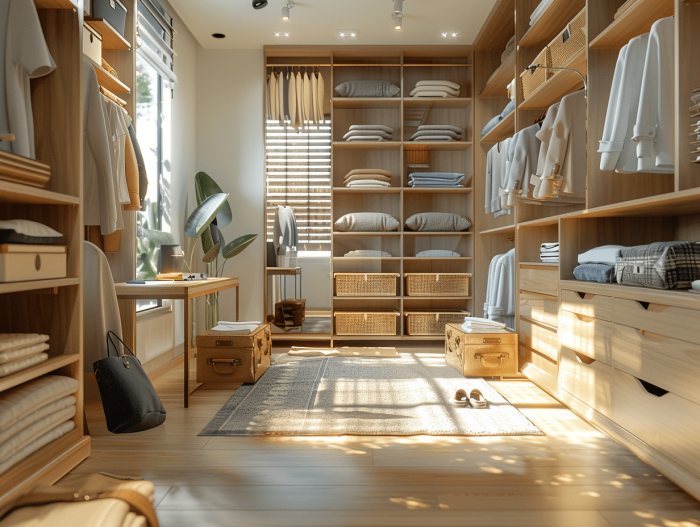
Transforming a room into a functional dressing area may seem like a challenge, but with a few tips, it becomes a breeze. The key lies in thoughtful organization and optimal use of every nook. By maximizing vertical space with shelves and hanging rods, and integrating drawers for small accessories, every piece of clothing finds its place.
Choosing light colors and mirrors also helps to visually enlarge the room, creating a more airy and pleasant atmosphere. Adding modular storage systems provides the necessary flexibility to adapt the space to evolving clothing needs.
Optimize the space for a functional dressing area
Arranging your space for a functional dressing area requires a strategic approach. Every inch must be utilized to maximize its usefulness. Opt for adjustable shelves and clothing rods to customize the layout according to your needs. Drawers, essential for accessories and underwear, help keep the space tidy and easily accessible.
Utilizing vertical space
Vertical space is often underutilized in a room. To optimize this space, install shelves up to the ceiling and use storage boxes for seasonal or rarely used items. Drop-down rods are also an excellent option for easily accessing clothes located high up.
- Adjustable clothing rods to adapt the hanging height
- Modular shelves for maximum flexibility
- Sliding drawers for easy access to small items
Sliding doors or curtains
For additional space savings, opt for sliding doors or curtains. These elements help free up space in front of the dressing area and provide an aesthetic and practical solution. Mirror sliding doors, for example, visually enlarge the room while offering additional functionality.
| Elements | Advantages |
|---|---|
| Sliding doors | Space-saving, aesthetic |
| Curtains | Flexibility, quick access |
The size of the dressing area should be adapted to the available space. A custom dressing area is often the best solution for perfect integration into the room. The materials used, such as wood, glass, or aluminum, should be chosen based on the interior decor and desired durability. Lighting, often overlooked, plays a fundamental role: prefer recessed lights or LED lamps for uniform and economical lighting.
Organize and personalize the interior of your dressing area
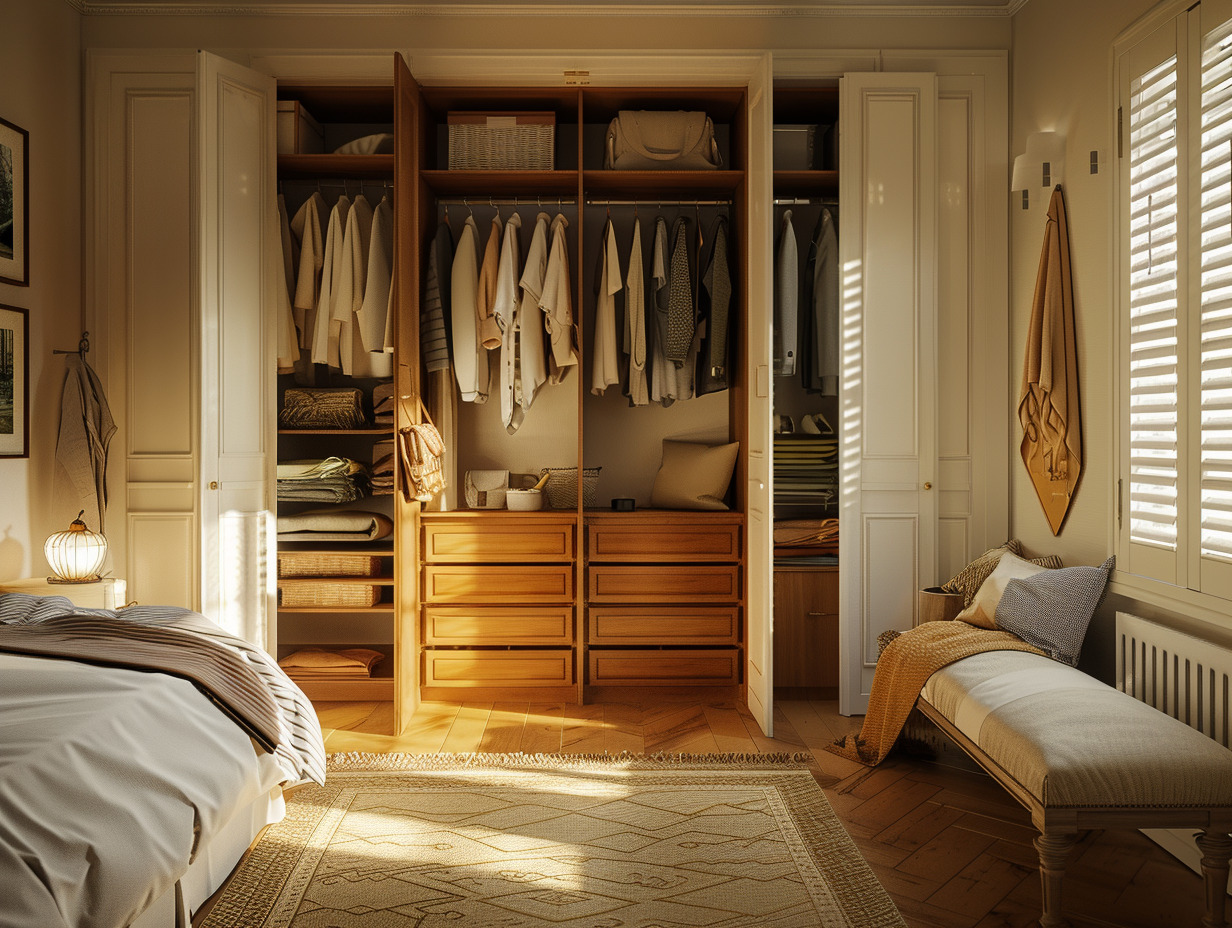
For optimal organization, each category of items should have its own dedicated space. Use shelves for hats, bedding, and luggage. Hooks are ideal for hanging coats, while storage cubes and sliding drawers provide a solution for shoes.
- Shelves: hats, bedding, luggage
- Hooks: coats
- Storage cubes: shoes
- Sliding drawers: shoes, underwear, jewelry
Customization and materials
Personalizing your dressing area involves choosing the right materials. Melamine panels, aluminum, wood, and glass allow you to create a unique space tailored to your tastes. For an extra touch, opt for solid wood partitions or faux leather fronts.
| Materials | Characteristics |
|---|---|
| Wood | Warmth, elegance |
| Aluminum | Modernity, lightness |
| Glass | Transparency, brightness |
Lighting and accessories
Lighting plays a fundamental role in optimizing the space. Recessed lights, LED lamps, and automatic lighting systems ensure perfect visibility. Rods equipped with photocells and colored lighting add a functional and aesthetic dimension to your dressing area.
For effective storage, use drawer organizers and storage baskets for clothes, belts, and scarves. A vanity with a mirror and racks for scarves complete the layout of your space.