The order of words in French does not allow for improvisation, but certain verbs change position depending on whether it is a question or a negation. Despite hundreds of thousands of speakers around the world, few master the subtleties of liaison or the subjunctive right away. The time spent does not always guarantee progress: without an appropriate method, memorization stagnates.
Recent approaches combine spaced repetition, daily immersion, and interactive digital resources. Effectiveness is measured by the ability to integrate these tools into the routine, combining grammatical rigor with regular speaking practice.
Why learning French can become simple and motivating
Acquiring the French language is not a path fraught with obstacles, provided one deciphers what fuels motivation and consistency. French is appealing for its precision, its nuances, and its musicality, which is no myth. However, learners hold back: the fear of making mistakes, the feeling of progressing too slowly, the apprehension of missing the meaning. These blockages fade as soon as one adopts a structured method and allows oneself the right to progress at their own pace.
It is tangible progress that fuels the desire to continue. Practicing day after day, turning every moment into an opportunity: speaking with a colleague, writing a message, listening to a podcast, browsing an article, all of this matters. Even without a diploma, a newcomer can prove their competence by daring to express themselves, accepting to correct themselves, and starting over. In France and elsewhere, employers place real value on oral and written proficiency.
Platforms like superfrench.fr have understood this well: learning French becomes more accessible when the language is integrated into daily life, supported by a tailored routine. Betting on relevant tools, on exercises that make sense, on resources capable of sparking curiosity: this is what makes learning smoother and more vibrant.
Three levers are essential for long-term progress:
- Daily practice: multiply opportunities to speak, write, and listen.
- Consistency: ten minutes a day is better than two hours at once.
- Desire: prioritize topics that stimulate interest and are rooted in reality.
What makes the difference is the coherence of effort, the ability to face difficulty without retreating. Learning French easily also means allowing oneself the right to try, to fail, and then to succeed, each week a little more.
What methods and free resources really facilitate progress
The choice of effective methods for quickly progressing in French is vast, and there is something to suit all profiles. Online French courses, often free, open the door to a great diversity: texts, videos, self-correcting exercises, support spaces. Thanks to these resources, it becomes possible to work on both listening comprehension and written comprehension, while refining grammar and vocabulary in a dynamic and interactive framework.
Free mobile applications, complementary to traditional tools, transform repetition into a daily habit. Ten minutes of practice, an alert, a quiz on grammatical structures: these little rituals quickly take hold. Podcasts, short articles, subtitled videos, or online dictation sessions: all of this brings contemporary French into daily life while consolidating spelling and syntax.
To navigate among the variety of approaches, here are some concrete avenues to explore:
- Interactive exercises to strengthen spelling and limit common mistakes.
- Watching French films and series to develop comprehension and oral fluency.
- Participating in workshops or online discussions to free spontaneous expression.
Those aiming for recognition of their level or wishing to advance professionally can focus on preparing for the Certificat Voltaire, widely recognized in the French job market. Training in spelling and expression, sometimes accessible via the CPF, boosts confidence and legitimacy in both oral and written communication. The proliferation of free resources allows everyone to dare, practice, and progress without delay.

Adopting effective habits for rapid daily progress
Consistency makes all the difference: learning French then becomes almost a reflex. A few minutes a day, organized around specific goals: enriching one’s vocabulary, practicing listening comprehension, improving written expression. It is not the accumulation that leads to progress, but the constancy. Learners advance by identifying their level, their weaknesses, and adjusting the method to their own pace.
To anchor knowledge, it is useful to vary approaches over the days:
- Alternate materials: podcasts, newspapers, videos, reading sessions.
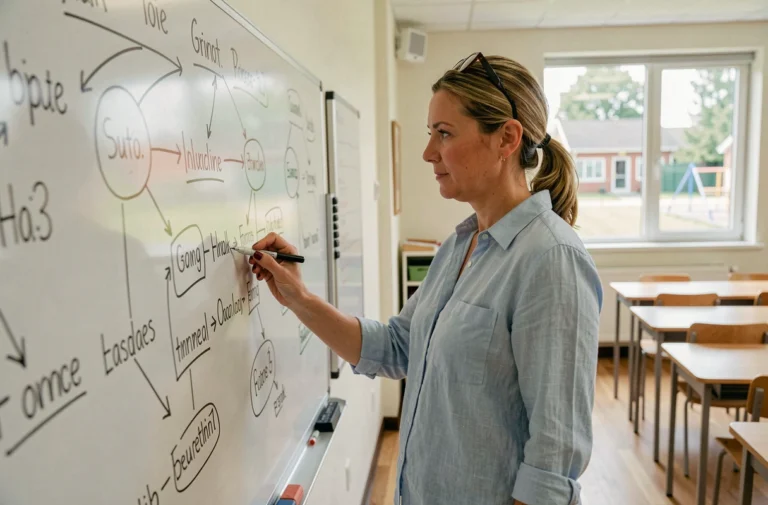
- Organize new words into mind maps or smart notes.
- Correct each mistake to firmly establish the rule or word.
- Opt for the active method: rephrase, exchange, create one’s own sentences.
Regular practice fosters solid automatisms. The Common European Framework of Reference for Languages (CEFR) serves as a compass: from level A1 to C2, each step corresponds to specific skills. Testing one’s level with a French test, setting a goal, preparing for the DELF, TCF, or TEF: all means to target efforts. The most motivated integrate learning into the flow of the day: listening to French radio while cooking, writing a short text every morning, chatting with a language partner.
Correcting mistakes, repeating in context, paying attention to pronunciation: every detail builds solid progress. Establish these routines, avoid spreading yourself too thin among too many methods, and the French language will eventually become a familiar, lively, manageable terrain. Dare, start over, and every word learned will open a new door.