
Decree No. 2024-276 has reshuffled the cards for anyone bringing back tobacco from Spain. The indicative thresholds remain set by European law, but their concrete application on the Franco-Spanish land routes has changed in nature since the summer of 2024. We detail here the regulatory subtleties that most consumer guides overlook.
Decree No. 2024-276 and land controls: what has really changed
The general framework of the European Union allows the transport of 800 cigarettes per adult (or four cartons) between two member states, provided that the tobacco is intended for strictly personal use. This ceiling has not been modified.
However, the DGDDI (General Directorate of Customs and Indirect Rights) has tightened its internal instructions for land flows. Since the end of 2024, customs explicitly distinguish between journeys by car, bus, motorcycle, or camper van and air or sea journeys. On the Franco-Spanish axis, one carton (200 cigarettes) per adult is the operational reference in the event of a close inspection by land.
In practice, a traveler returning by car with two or three cartons may be asked to prove personal use, whereas by plane the threshold of 800 cigarettes remains the norm applied without friction. To understand how many cartons of cigarettes can be brought back from Spain per person, one must first identify their mode of transport.
Personal use and transport for others: the legal boundary that traps travelers
European law conditions the exemption of 800 cigarettes on the personal use of the holder. French customs have specific criteria to assess this condition, and some customs offices in the Pyrénées-Orientales and Pyrénées-Atlantiques now apply them systematically.
Criteria used by customs officers
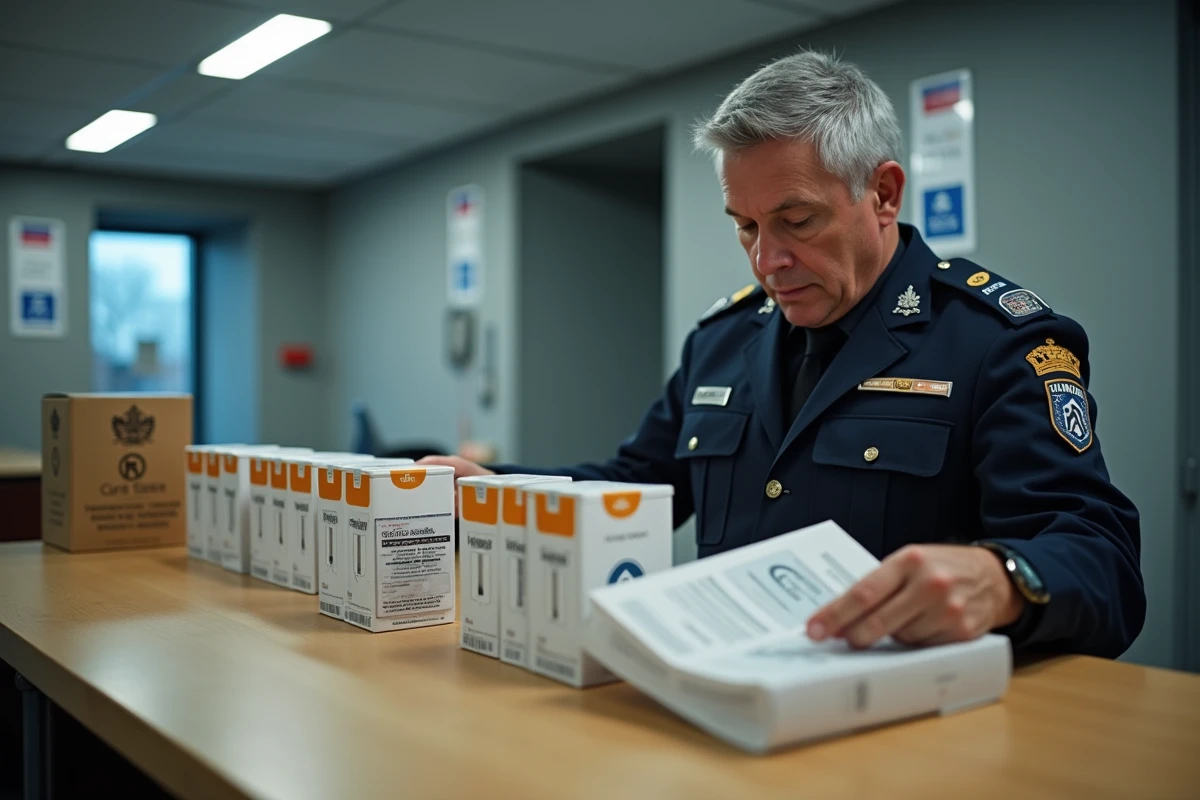
During an inspection, agents evaluate a set of indicators. The quantity transported is just one element among others. Here are the points that most often trigger a reclassification as commercial possession:
- The transport of tobacco on behalf of a third party, even for free. Carpooling where each passenger does not physically hold “their” cartons is enough to characterize transport for others.
- The presence of reimbursements via payment apps (Lydia, PayPal, Revolut) between the driver and others, even for modest amounts. Customs officers check phones in case of doubt.
- Group purchases organized in advance, identifiable by the frequency of trips or message exchanges. A “service trip among colleagues” is reclassified as a purchase for resale, even below the threshold of 800 cigarettes per person.
- The purchasing behavior itself: visiting several tobacco shops or Spanish shopping centers close to the border during the same short trip.
We observe that the notion of personal use no longer automatically protects the traveler who remains below 800 cigarettes. The set of indicators takes precedence over the raw quantity.
Seizures and sanctions on the Franco-Spanish border since 2024
The customs offices in the Pyrénées-Orientales and Pyrénées-Atlantiques report a significant increase in targeted inspections since the summer of 2024. Operations are no longer limited to border posts: parking lots at service stations, areas around Spanish shopping centers near the border, and highway rest areas on the A9 and A63 are now part of the control zones.
The notable point: seizures now occur for modest quantities, between one and three cartons beyond the threshold considered personal. Before Decree No. 2024-276, these volumes generally passed without difficulty. This is no longer the case.
Financial consequences of a seizure
In the event of reclassification, the tobacco is confiscated. A customs fine is added, calculated based on the value of the seized products and the duties evaded. For cases of recidivism or larger quantities, criminal prosecution remains possible. The confiscation of the vehicle may be ordered when the transport is classified as organized smuggling.
Tobacco purchased in Spain: indicative thresholds by product
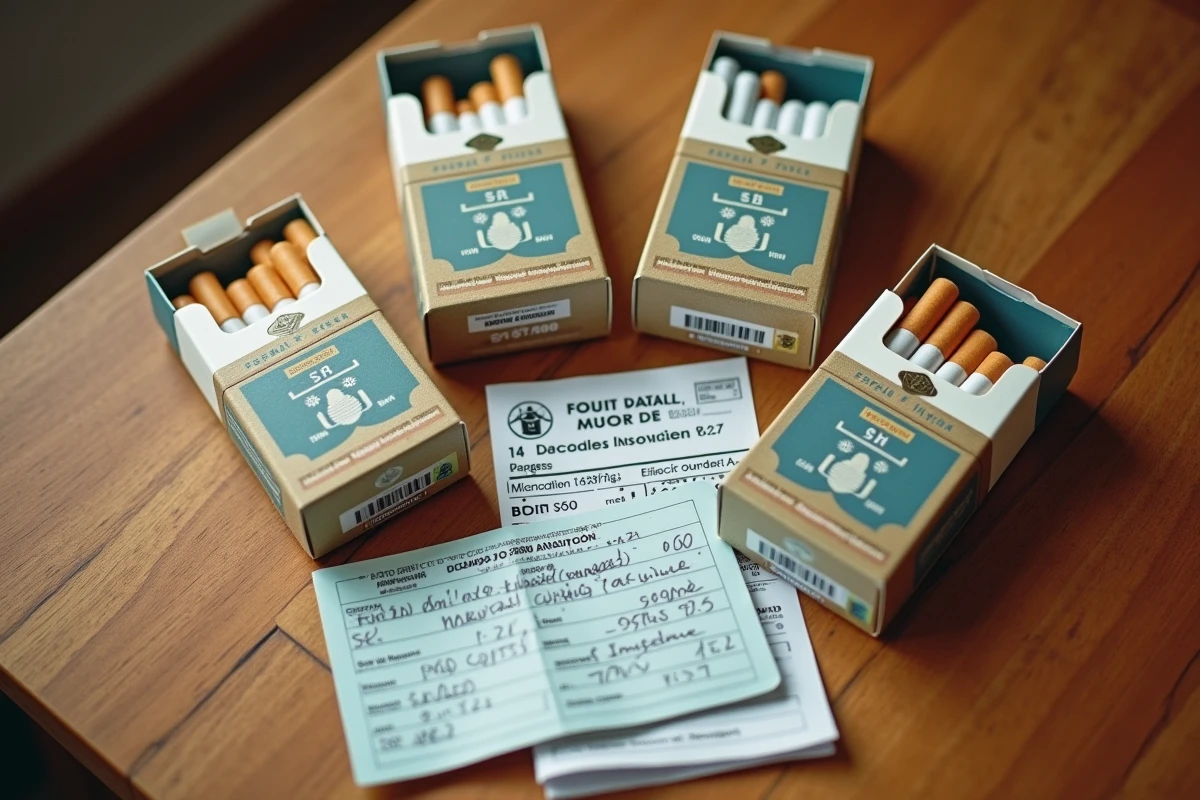
The European framework sets indicative thresholds beyond which personal use must be demonstrated. These thresholds apply per adult and per trip, for a return from a country in the European Union such as Spain:
- Cigarettes: 800 units (four cartons)
- Cigarillos: 400 units
- Cigars: 200 units
- Rolling tobacco: one kilogram
These quantities do not constitute an automatic right. They represent an indicative threshold beyond which the burden of proof shifts. Below this, the traveler benefits from a presumption of personal use, but this can be overturned by the criteria mentioned above.
Special case of overseas departments and regions
The DROM (Guadeloupe, Guyana, Martinique, Mayotte, Réunion) as well as overseas collectivities, the Canary Islands, Andorra, Monaco, and Switzerland fall under the “other zone” regime. The thresholds there are significantly lower. Mainland Spain and the Canary Islands do not have the same rules: a return from the Canary Islands applies the non-EU ceilings.
Practical recommendations for a risk-free border crossing
We recommend limiting transport to one carton per adult during a land trip, in accordance with the operational reference applied by customs on the Franco-Spanish axis. Each passenger must physically hold their own tobacco, with a receipt in their name or in their direct possession.
Any trace of cross-reimbursement between passengers poses a risk. Eliminate group purchases and “commissions” among acquaintances if you wish to avoid reclassification. Frequent round trips within the same week attract the attention of automated control systems at tolls.
The price of tobacco in Spain remains significantly lower than that in France, which fuels a constant flow of cross-border travelers. This economic reality precisely explains the strengthening of customs controls, and the growing gap between the theoretical European threshold and the practical situation on the roads of the Pyrénées.